Diabetes Australia — Web Content Edit
An editorial restructure of a medical information page for Diabetes Australia's NDSS. Focused on plain English, heading hierarchy and scannability, making urgent health information easier to find and act on.
About the original
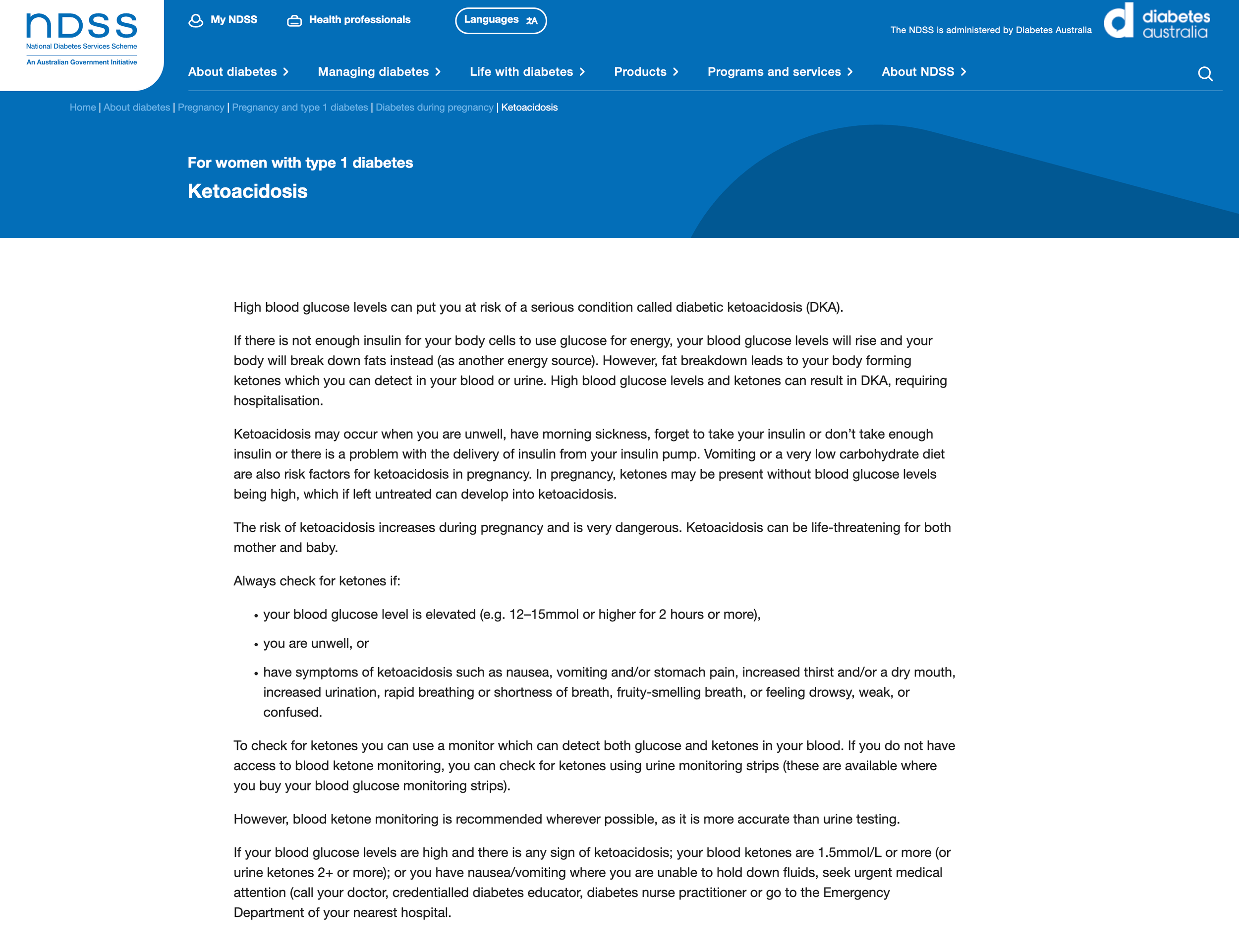
The original page had no subheadings, dense unbroken paragraphs, and buried the symptoms and urgent medical information in long run-on sentences.
Click the image below to see the original page.
My Edit
What is Ketoacidosis?
Ketoacidosis (DKA) is a serious, life-threatening condition that is caused by high blood glucose levels.
The condition develops when the body doesn’t make enough insulin. Insulin is essential to help your blood sugar, also called glucose, enter the cells in your body and turn it into energy. Without enough insulin, your blood sugar levels will rise as your body starts to break down fats to create the energy you need.
As your body breaks down fats, this leads to a buildup of acids called ketones.
High blood glucose levels and ketones can result in DKA, requiring hospitalisation.
How ketoacidosis can affect women with type 1 diabetes
Ketoacidosis is most common among people with type 1 diabetes. The risk increases for women during pregnancy and can be life-threatening for both mother and baby.
In pregnancy, ketones may be present without high blood glucose levels, which, if left untreated, can develop into ketoacidosis.
If you are pregnant, ketoacidosis may occur when you:
are unwell
have morning sickness
missed an insulin injection
have not taken enough insulin
there is a problem with the delivery from your insulin pump.
Vomiting or a very low-carbohydrate diet are also risk factors for ketoacidosis in pregnancy.
What are the symptoms of ketoacidosis?
Symptoms of ketoacidosis include:
nausea
vomiting and/or stomach pain
feeling extremely thirsty and/or a dry mouth
having to pee more than usual (frequent urination)
rapid breathing or shortness of breath
fruity-smelling breath
feeling drowsy, weak, or confused.
When and how do I check for ketones?
Always check for ketones if:
your blood glucose level is elevated
e.g. 12–15mmol or higher for 2 hours or more
you are unwell, or
you have symptoms of ketoacidosis.
To check for ketones, you can use a monitor that detects both glucose and ketones in your blood.
If you do not have access to blood ketone monitoring, you can check for ketones using urine monitoring strips. You can buy urine ketone test strips or blood ketone testing kits at your pharmacy or online.
Blood ketone monitoring is recommended wherever possible, as it is more accurate than urine testing.
When to seek medical attention
If your blood glucose levels are high and there is any sign of ketoacidosis, seek urgent medical attention.
You’ll know if you’re in ketoacidosis if your blood ketones are 1.5mmol/L or more (or urine ketones 2+ or more), or you have nausea or vomiting where you are unable to hold down fluids.
Call your doctor, credentialled diabetes educator, diabetes nurse practitioner (DNP), or go to the emergency department of your nearest hospital.
Why I made these changes
Added subheadings so readers can scan and find information quickly
Included a definition of Ketoacidosis and highlighted the acronym up front to address the first question that might come up for readers
Added a plain English explanation of insulin - essential context the original was missing
Highlighted the focus on women with Type 1 diabetes as it’s the main subject of the page
Broke paragraphs up so it’s less overwhelming to read
Rewrote in plain English - the original assumed too much medical knowledge
Separated symptoms into their own clearly labelled section - critical for a health page
Gave urgent medical advice its own clearly labelled section - urgent medical advice needs to be easily findable